Concrete Foundation Repair: Marietta Homeowner's Guide
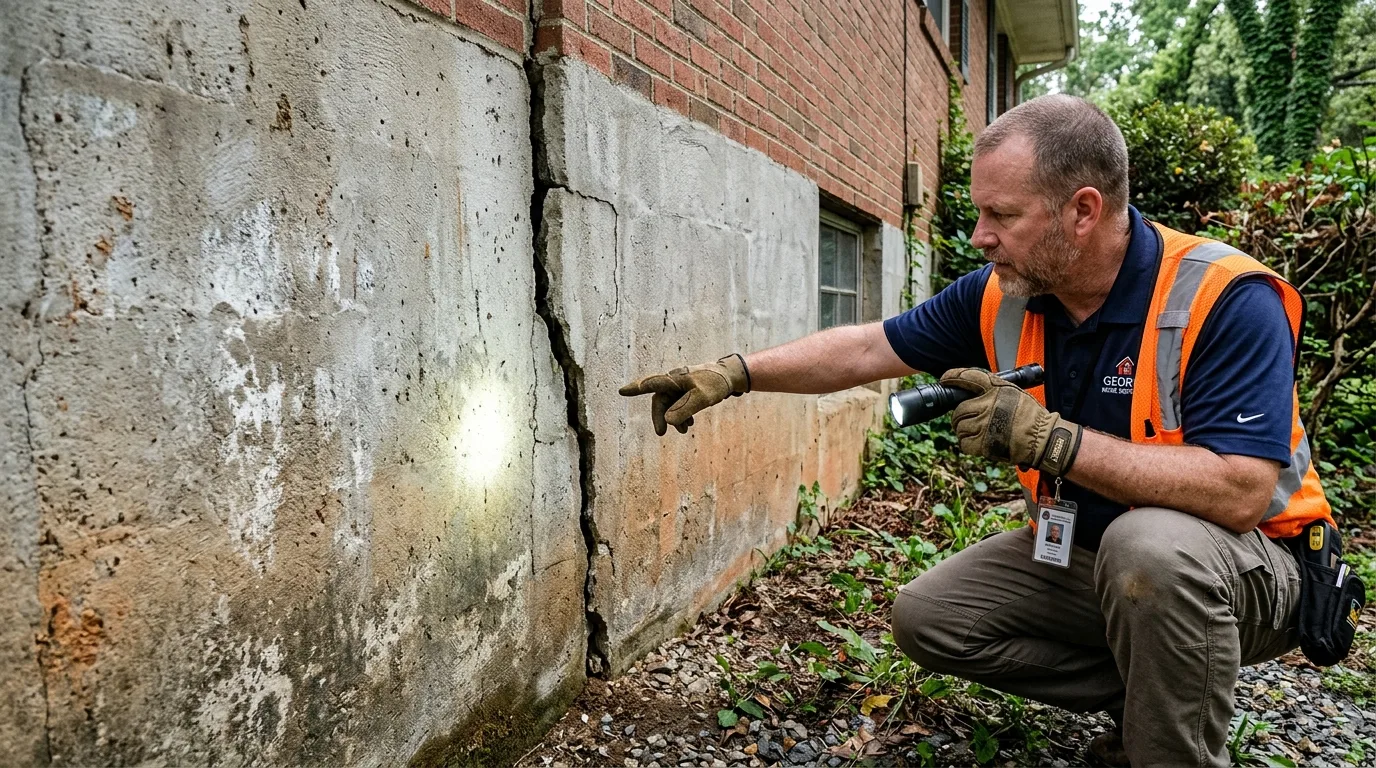
Foundation problems in Marietta, GA follow a predictable pattern. A homeowner notices a diagonal crack running from a door corner, or a door that suddenly sticks after years of working fine. They ignore it for a season, then another. By the time they call a contractor, what could have been a $2,000 repair has become a $10,000 structural project. Understanding foundation repair in Marietta — what causes it, what the warning signs are, and what realistic repair options look like — helps Cobb County homeowners act early rather than react late. In this guide, we cover everything a Marietta homeowner needs to know before calling a foundation repair contractor.
Free Foundation Assessment in Marietta
Marietta Concrete Works provides honest foundation evaluations for Cobb County homeowners. No obligation, fast response.
Why Foundation Problems Are Common in Marietta, GA
Marietta’s foundation repair market is larger than most comparable-sized cities for a specific reason: Georgia red clay. Cobb County sits in the Piedmont region where red clay soils with 40–60% clay content dominate. This expansive clay swells with moisture absorption and contracts during dry periods — a cycle that exerts lateral and vertical pressure on foundation elements year after year.
The age of Marietta’s housing stock amplifies the problem. With 78% of homes built before 1981, most Marietta foundations were designed before modern understanding of clay soil behavior became standard in residential construction. Many older foundations in the East Cobb and Historic Marietta district lack the drainage management, reinforcement, and foundation depth that would be standard in a new Marietta home today. The result is a large population of homes with aging foundations on active clay soil — and a predictable repair cycle for owners who didn’t receive proactive foundation guidance when they purchased.
Types of Foundation Damage in Marietta Homes
Differential settlement is the most common foundation issue in Marietta — different parts of the foundation settle at different rates due to uneven moisture distribution in the clay below. Older homes in the Windsor Oaks and Chimney Springs neighborhoods frequently show this pattern, particularly on the downslope side of the lot where water concentrates and clay remains wetter longer than other areas.
Hydrostatic pressure cracking occurs when water-saturated clay around foundation walls or slabs exerts pressure that exceeds the concrete’s tensile capacity. Cracks that open along the base of foundation walls or at the wall-slab junction in Marietta often have this cause — especially in homes where downspout drainage deposits water close to the foundation.
Expansive heave happens when clay beneath the foundation slab or footing swells enough to push the structure upward. Heave is more common in Marietta homes with interior slab foundations directly on clay, particularly where the slab lacks the thickened-edge reinforcement needed to resist upward pressure at the perimeter.
Tree root intrusion affects many of Marietta’s older wooded-lot properties, particularly in neighborhoods like Chestnut Creek where mature oak and sweetgum trees are common. Root systems draw moisture from clay in the dry season, accelerating shrinkage beneath the foundation perimeter — and can physically displace foundation elements over decades.
Practical Uses: Foundation Repair Methods for Marietta Homes
-
Crack injection (epoxy or polyurethane): For concrete foundation walls and slabs with cracks that haven’t caused structural displacement — epoxy injection restores monolithic strength; polyurethane injection stops water infiltration in active cracks. Cost-effective first repair for minor to moderate cracking in East Cobb homes.
-
Mudjacking (pressure grouting): Pumping a grout mixture beneath a settled slab to lift it back to elevation. Effective for interior slab settlement, garage floor settlement, and perimeter foundation beam settlement. A mainstay repair method for Marietta’s common slab-on-grade foundations. Typical cost $800–$2,500 per area.
-
Polyurethane foam injection: Lightweight, fast-curing alternative to mudjacking that uses expanding foam rather than grout. Better for areas where weight is a concern; sets in minutes rather than days. Higher material cost but faster turnaround. Increasingly used for residential slab lifting in the Marietta market.
-
Steel push piers or helical piers: For significant foundation settlement or where mudjacking is not appropriate, steel piers driven to load-bearing strata (below the active clay layer) provide permanent structural support. Helical piers are torque-screwed into the ground; push piers are hydraulically driven. Most expensive repair method ($5,000–$15,000+ for multiple piers) but provides the most durable long-term support on Marietta’s clay.
-
Drainage correction: Not a repair method itself, but the most important companion to any structural foundation repair in Marietta. Correcting gutters, downspouts, and perimeter grading to direct water away from the foundation reduces the moisture cycling that drives ongoing clay movement. Without drainage correction, structural repairs in Marietta’s clay conditions are fighting an ongoing battle.
How Drainage Affects Foundation Performance in Marietta
The single most important long-term factor in foundation performance on Marietta’s clay soil is drainage management. When homeowners invest in foundation repair without addressing the drainage pattern around the home, the clay soil continues its moisture-driven expansion and contraction cycle at the same rate — and the repair works against the same forces that caused the original damage. The Marietta market has many homes in the Historic Marietta district and older West Cobb neighborhoods where original grading was done without modern drainage standards, and where foundation damage is a predictable outcome of those early grading choices.
Concrete foundations in Marietta that manage drainage well — with downspouts extended 6+ feet from the foundation, ground sloped away from the structure, and no landscape plants creating moisture concentrations against the foundation walls — consistently outlast similar homes with poor drainage, regardless of repair history. This is the most cost-effective foundation maintenance measure a Marietta homeowner can take.
Frequently Asked Questions About Foundation Repair in Marietta
How do I know if I need foundation repair in Marietta?
Key warning signs in Marietta homes include: diagonal cracks running from door or window corners (stair-step pattern in brick); doors or windows that stick, bind, or no longer square with their frames; visible cracks in the foundation slab or perimeter beam; floors that slope noticeably toward one corner; gaps between walls and ceiling or floor; and water infiltration through foundation walls after rain. Any single sign warrants a professional assessment — multiple signs together warrant urgent evaluation.
Is foundation repair covered by homeowner’s insurance in Georgia?
Most standard homeowner’s insurance policies in Georgia exclude foundation damage caused by soil movement (settling, expansion, shrinkage) — which includes the Georgia red clay movement that causes most Marietta foundation damage. Damage caused by sudden events like flooding or plumbing leaks may be covered depending on the policy. Before investing in repairs, it’s worth reviewing your policy and speaking with your insurer to confirm what is and isn’t covered for your Marietta property.
How do I find a reputable foundation repair contractor in Marietta?
Ask specifically about their experience with Georgia red clay foundations, request references from similar projects in Cobb County completed in the last 24 months, verify that they pull required permits and schedule inspections, and insist on a written scope of work before any money changes hands. See our guide on 7 questions to ask before hiring a concrete contractor in Marietta for a full contractor vetting framework.
Foundation Repair in Marietta — Free Assessment
Call Marietta Concrete Works at (888) 376-0955 for an honest foundation evaluation. No sales pressure — just an accurate picture of what's happening and what it will take to fix it.
Related: