Best Time of Year to Pour Concrete in Marietta, GA
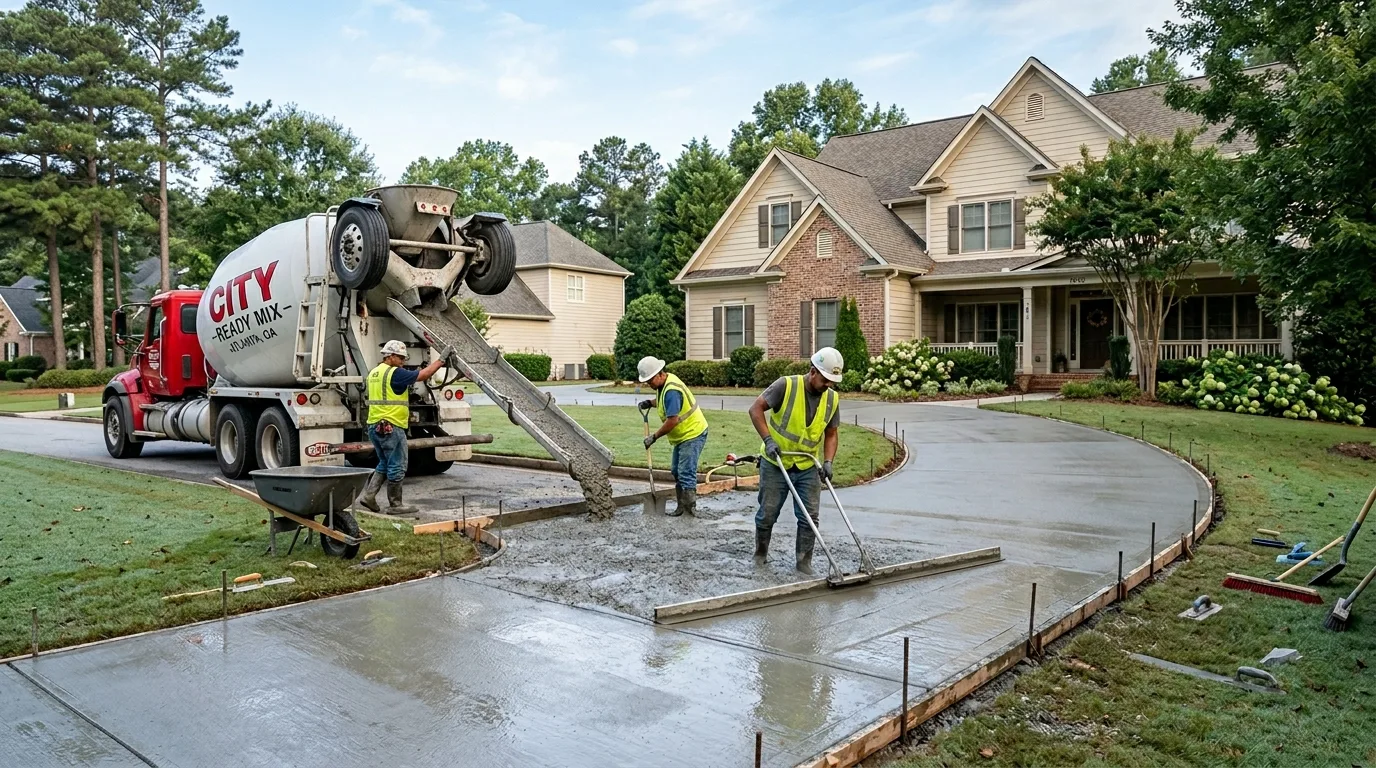
Timing a concrete pour in Marietta, GA is more important than most homeowners realize. Georgia’s climate presents a narrow window of ideal concrete conditions — and the months on either side of that window require adjustments that affect both project quality and cost. Pour concrete in the wrong season without the right precautions, and you risk plastic shrinkage cracking, insufficient cure strength, or freeze damage that shortens the life of the slab before the first vehicle rolls across it. In this post, we cover the best and worst times to pour concrete in Marietta, what specific conditions matter most, and how skilled contractors manage off-season pours when the schedule requires it.
Schedule Your Marietta Concrete Project
Marietta Concrete Works manages seasonal timing on every project. Free estimates for driveways, patios & more.
Why Seasonal Timing Matters for Concrete in Marietta
Concrete’s strength development depends directly on temperature and moisture conditions during the first 28 days after the pour. The ideal temperature range for concrete curing is 50–70°F — warm enough to accelerate the chemical hydration process, but cool enough to prevent the rapid moisture evaporation that causes surface cracking. Outside that range, extra steps are needed to protect the concrete during the critical early cure period.
Marietta’s temperatures stay comfortably within the ideal range only during spring and fall. The rest of the year presents challenges — summer brings temperatures that regularly push above 90°F with high humidity that accelerates surface drying, and winter brings enough cold nights to risk freeze damage to concrete that hasn’t reached adequate strength. Understanding the seasonal pattern in Marietta — not just abstract concrete chemistry — is what separates a well-timed project from one that requires repairs within the first year.
Plan Your Marietta Concrete Project Right
We advise on seasonal timing for every project we estimate. Call (888) 376-0955 to discuss your timeline.
Types of Seasonal Conditions for Concrete in Marietta
Spring (March–May): The best season for concrete work in Marietta. Temperatures average 55–75°F, humidity is moderate, and consecutive dry days for curing are reliably available. Spring concrete pours benefit from the ideal temperature range with minimal need for protective measures. Demand for concrete contractors peaks in spring, so scheduling early — ideally January or February for a March–April pour — ensures contractor availability.
Summer (June–August): The most challenging season for concrete in Marietta. Average highs reach 87–89°F with high relative humidity (often 75–85% by afternoon). Concrete sets faster in heat, which compresses the window for finishing work on large pours and increases the risk of plastic shrinkage cracking as the surface dries faster than the interior of the slab cures. Summer pours require early morning scheduling (starting at dawn to complete large pours before 10 a.m.), curing blankets or wet burlap to retain moisture, and wind breaks on exposed sites.
Fall (September–November): The second-best season and often preferable to spring for planning purposes. Temperatures drop into the 55–75°F range by late September, humidity decreases compared to summer, and the drier weather provides reliable consecutive dry days for curing. Fall pours produce excellent results and give homeowners a finished surface ready for spring outdoor season — making it a popular choice for patios and driveways in Marietta’s East Cobb and Kennesaw neighborhoods.
Winter (December–February): The riskiest season for concrete in Marietta. Average overnight lows can drop to 30–35°F in January, and periods of sub-40°F temperatures during the 28-day cure period can cause freeze damage to concrete that hasn’t reached adequate strength. Freshly poured concrete that freezes before reaching 500 psi strength loses significant long-term strength and may show surface scaling within the first year. Winter pours are manageable with insulating blankets, heated enclosures on large commercial pours, and accelerating admixtures — but these measures add cost and require experience with cold-weather concrete practices.
Practical Uses: Concrete Scheduling for Specific Projects in Marietta
-
New concrete driveway: Schedule for March–May or September–November for best results. For a spring driveway, call contractors in January to secure your preferred date before peak season fills up. Driveways near Truist Park and the I-75/I-575 interchange may have access limitations during spring Braves season that affect scheduling.
-
Concrete patio installation: Fall (September–November) is the ideal timing — mild temperatures, lower humidity than summer, and you’ll have the patio ready for spring outdoor entertaining. The West Cobb and Powder Springs communities see high patio demand in fall for this reason.
-
Stamped concrete: The working window for stamping — the time between pour and when the concrete stiffens too much to stamp — is significantly compressed in summer heat. Spring and fall are strongly preferred for stamped concrete in Marietta to give crews adequate time for pattern work.
-
Concrete repair: Most crack fills and small patches can be done year-round in Marietta’s mild climate. Major resurfacing projects are better scheduled in spring or fall when dry conditions are more reliable, but crack filling specifically benefits from doing the repair before the wet spring season opens cracks further through clay soil movement.
-
Foundation repair: Late summer and fall timing for foundation repair aligns with when clay soil has reached its seasonal expansion maximum after summer rainfall — giving the most accurate picture of the true settlement extent before repair work begins.
-
Commercial concrete pours (parking lots, large slabs): Schedule in spring or fall for large-volume pours. Multi-day commercial pours in summer require early-morning scheduling and significant curing management that adds project cost in Marietta’s heat.
How Georgia’s Climate Creates Concrete Challenges by Season
The cost consequence framing of Marietta’s seasons: improperly timed summer concrete adds 10–20% in protective measures, curing admixtures, and additional labor. Improperly handled winter pours that freeze during cure can require full removal and replacement — a cost that dwarfs any perceived savings from scheduling in the off-season. The 4–6 week spring and fall windows are worth planning around, and most Marietta concrete projects can be scheduled to hit those windows with 6–8 weeks of advance planning.
Marietta Concrete Works monitors forecasts for the 7 days following every scheduled pour date. We will not pour when a 40°F night is forecast within the first 24–48 hours of a concrete installation — protecting the investment matters more than hitting an arbitrary start date. Read our concrete driveway guide for more on how Georgia red clay affects driveway longevity.
Frequently Asked Questions About Concrete Timing in Marietta
Can you pour concrete in Georgia in the winter?
Yes — winter concrete pours are possible in Marietta when overnight temperatures stay consistently above 40°F during the cure period. Marietta’s winters are milder than most of the country, and extended cold snaps are relatively short. When a winter pour is necessary, we use insulating blankets, accelerating admixtures, and monitor forecasts closely for the first week. February tends to be safer than January for winter pours in the Marietta area.
What temperature is too hot to pour concrete in Marietta?
Concrete quality begins to suffer when air temperatures exceed 90°F at the time of the pour. At these temperatures, concrete sets too quickly for quality finishing work and surface evaporation causes plastic shrinkage cracking. We schedule summer pours to start before sunrise and complete the pour before temperatures climb above 85°F. Large summer pours may use ice-cooled mix water or liquid nitrogen-cooled concrete to manage mix temperature.
How long after pouring concrete can I use my Marietta driveway?
Foot traffic is safe after 24–48 hours in normal Marietta conditions (spring/fall). Vehicle traffic requires a 7-day minimum, but we recommend 28 days for full cure strength before heavy vehicles or regular traffic. In summer, higher ambient temperatures speed surface strength development slightly; in winter, the timeline extends. See our concrete driveway installation page for more detail on curing requirements.
Marietta Concrete — Timed Right Every Project
Marietta Concrete Works schedules pours around weather conditions and provides written cure timelines. Call (888) 376-0955.
Related: